Table of contents
After a heavy loss at a casino table or inside an online lobby, a familiar thought often hits with uncomfortable speed: one more round and I can get it back. In the UK, where gambling is both mainstream entertainment and a fast-growing public health concern, that urge matters, because “chasing losses” is not simply a bad decision in the moment, it is a predictable psychological spiral. Researchers have mapped the cognitive distortions behind it, regulators have tracked the harm signals and operators have tightened safeguards, yet the comeback fantasy keeps pulling players in.
When “one more” becomes the whole night
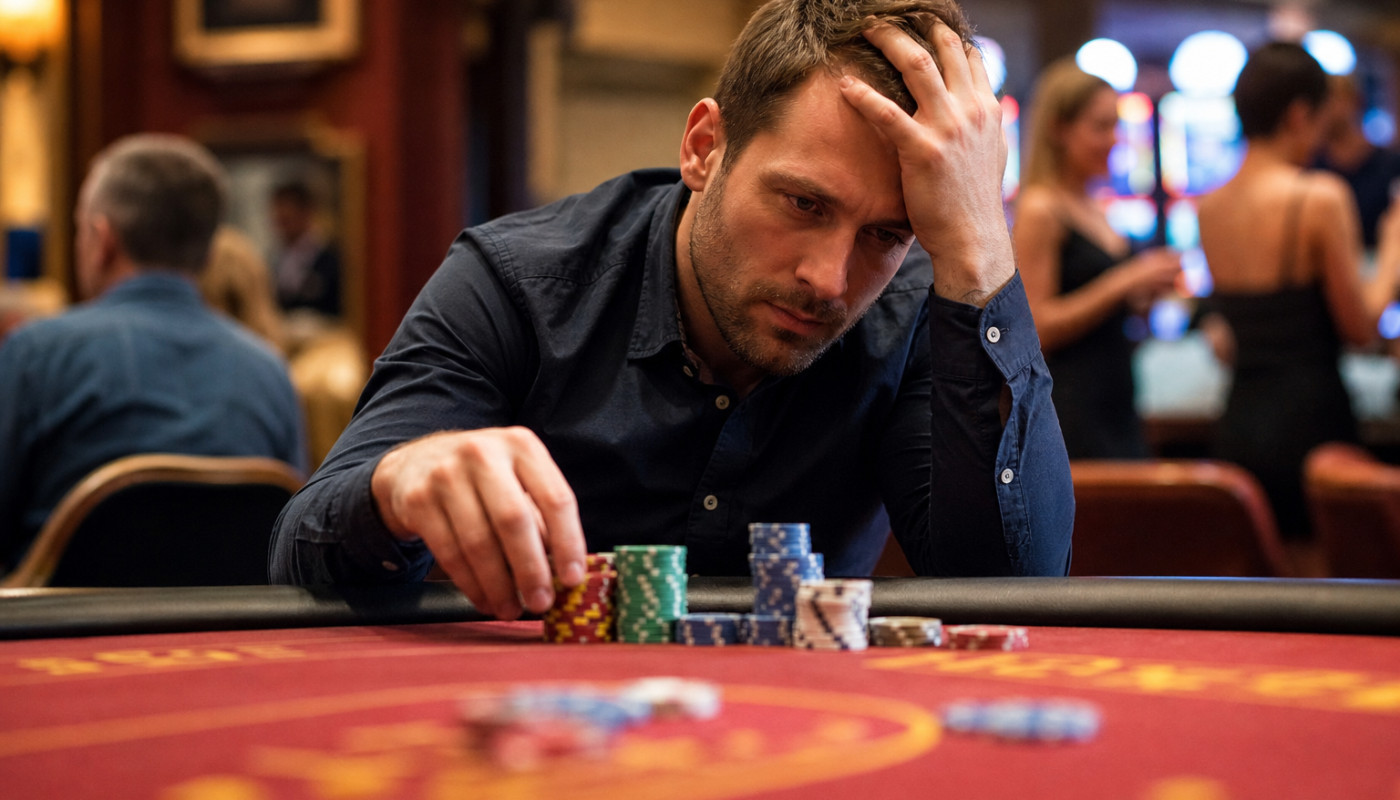
Could a single decision really flip the script? In loss-chasing, players respond to losses by increasing stake size, extending time spent gambling, or switching to faster products, not because probabilities improve, but because the emotional pressure to erase a deficit becomes the primary goal. Behavioural studies have consistently linked this pattern to impaired decision-making under stress, and to a shift from entertainment to “repair mode”, where the session is no longer about play but about restoring a previous financial and emotional state.
Several lab experiments help explain why the behaviour feels so compelling. After a loss, arousal rises, attention narrows and people become more sensitive to cues that signal a possible rebound, such as near-misses on slots or a short run of “wins” on roulette. Near-misses are especially potent because they activate reward-related brain pathways despite being objective losses, a finding replicated in neuroimaging work over the past decade. In plain terms, the brain reacts as if it almost succeeded, and that “almost” can be enough to keep someone seated, reloading, and pushing for a turnaround.
Loss-chasing is also fuelled by the speed and design of modern gambling. Faster games compress decision cycles, meaning there is less time for reflection between outcomes, and more opportunities to escalate. In the UK market, online slots and in-play betting are often cited by clinicians and treatment services for precisely this reason: the pace allows frustration and hope to alternate rapidly, and each new wager can feel like the start of a comeback story. Add alcohol, fatigue, and social pressure, and the session can run far beyond the original plan.
The harms are measurable. UK prevalence surveys have shown that while most adults gamble without meeting criteria for problem gambling, a small percentage experience severe difficulties, and a larger group sits in a “moderate risk” band where chasing losses is a common symptom. Public Health England has previously described gambling-related harm as affecting not only individuals but also families and communities, and treatment providers repeatedly point to loss-chasing as one of the clearest early warning signs because it correlates with mounting debt, secrecy and escalating emotional distress.
The brain hates unfinished losses
Why does a loss feel like a loose end? One driver is loss aversion, a cornerstone finding from behavioural economics: people tend to experience losses more intensely than equivalent gains. That imbalance can make a player willing to take bigger risks to avoid “locking in” a loss, even when the rational move would be to stop. The urge is not just about money either; it is also about self-image, competence and control, because walking away can feel like admitting defeat, while continuing offers the illusion of agency.
Then comes the sunk cost fallacy. After investing time and money into a session, quitting can feel wasteful, as if leaving now would make the earlier spending meaningless. Psychologists have long noted that humans struggle to abandon a course of action once resources have been committed, even when future outcomes are independent of past spending. In a casino setting, that cognitive trap is reinforced by the environment: bright cues, constant availability and the occasional small win that seems to validate staying a bit longer.
Another key distortion is the gambler’s fallacy, the belief that a run of losses makes a win “due”. In games of pure chance, the probability does not “balance out” in the short term, yet the mind searches for patterns, especially under stress. When players interpret random variance as momentum, the comeback narrative writes itself. People also tend to overweight memorable events, so a past experience of recovering losses can dominate decision-making, even if, statistically, it was an outlier. The memory becomes proof that chasing can work, and the many times it did not fade into the background.
Emotion completes the mechanism. Anger after a bad beat, shame after overspending, or anxiety about explaining the loss can all push a person deeper into play. Research on “tilt”, a term borrowed from poker, captures this loss of emotional regulation, and it is increasingly discussed in relation to online gambling more broadly. Once in tilt, players often abandon limits, switch games impulsively and take risks they would reject in a calm state, and that is how a modest loss can escalate into a damaging one.
Online gambling turbocharges the comeback fantasy
Is the screen changing the psychology? Digital gambling does not invent loss-chasing, but it can intensify it. Mobile access removes friction: no travel home, no closing time in the same way, and no social visibility that might trigger a pause. With a few taps, a player can deposit again, and that immediacy matters, because the most dangerous moment is often the minute right after a loss, when emotion peaks and judgement dips.
Game design can also amplify “near-win” sensations. Slots, for example, can present outcomes that look close to a jackpot, and while this is not the same as cheating, it is a powerful behavioural cue. Fast spin speeds and autoplay functions reduce opportunities to reconsider, and bonus features can create the impression of progress, even when the expected return is negative. In sports betting, in-play markets deliver a constant stream of micro-decisions, and when a bet loses late, the temptation to place another immediately, to “fix” the outcome, is built into the experience.
Community discussion can cut both ways. On one hand, peer spaces allow players to share strategies for staying in control, compare experiences and learn the math behind odds, randomness and expected value. On the other, they can normalise high-risk behaviour if the loudest stories are comeback tales rather than the quieter reality of long-term losses. For readers who want to explore how other players talk about sessions, limits and the psychological traps around chasing, iGamer Forums offers a window into the conversations that shape attitudes, for better or worse.
Regulation is trying to catch up with the speed of the product. In the UK, the Gambling Commission has introduced and expanded measures aimed at reducing harm, including tighter rules around customer interaction, affordability considerations and marketing practices. The NHS has also increased attention on gambling treatment pathways, and the political debate has focused on whether industry safeguards are sufficient in a market where gambling is available 24/7. Still, the core psychological triggers remain stubbornly effective, especially when a player is tired, stressed or chasing a specific number rather than thinking in probabilities.
Breaking the cycle before it breaks you
What would stopping look like in practice? The first step is recognising the “comeback” thought as a red flag, not a plan. The money already lost is gone, and the next wager is a new decision with its own odds, so tying it to recovery is a mental trick. Clinicians often encourage a short interruption, because even a five-minute pause lowers arousal and restores deliberation; stepping away from the screen, getting water, or messaging a friend can be enough to reset the spiral.
Tools matter when willpower is strained. Deposit limits, loss limits and time-outs create friction at the exact moment a player is most vulnerable, and self-exclusion programmes go further by blocking access across operators for a set period. In the UK, multi-operator self-exclusion schemes exist for both online and land-based gambling, and while no tool is perfect, these barriers consistently show value because they remove the ability to act impulsively. Bank-level gambling blocks can add another layer, and many major UK banks now offer them as an optional feature.
Budgeting needs to be blunt, not aspirational. A realistic approach is to treat gambling spend like any other entertainment cost: decide the amount in advance, withdraw or allocate it, and consider it spent the moment play begins. If the idea of losing that budget feels intolerable, that is useful information, because it suggests the session is being framed as income generation rather than recreation. Another practical rule is to avoid “recovery deposits”, the extra top-up made solely to chase the first loss, because that second deposit is often where control slips.
When chasing becomes frequent, support should be immediate, not delayed until a crisis. In the UK, the NHS and third-sector organisations provide routes into treatment, and many people benefit from cognitive behavioural therapy approaches that target distorted beliefs about randomness and control, while also building emotional regulation skills for the moments that trigger chasing. The earlier someone seeks help, the easier it is to reverse the pattern, because the goal is not just to stop gambling, but to stop gambling as a response to stress, shame or financial fear.
How to set a safer plan
If you are booking a night out or logging on at home, set the budget first and make it non-negotiable, then pre-commit to a stop time and use app limits or alarms to enforce it. If you need stronger guardrails, activate deposit limits and consider a time-out or self-exclusion, and check whether your bank offers a gambling block. In the UK, free support and advice are available through NHS pathways and specialist services, and seeking them early can prevent a “comeback” from turning into a costly routine.
Similar